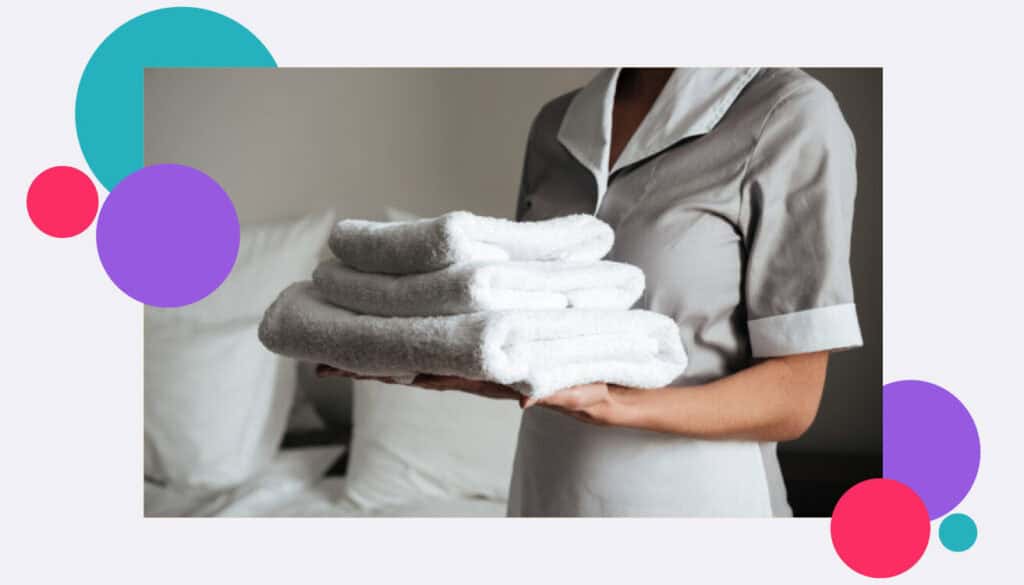
Lone working in hotels is one of the least visible risks in hospitality. Staff clean rooms alone, cover a front desk with nobody else on shift, and walk empty corridors at hours when the rest of the building is asleep. Two pieces of UK law are about to change what employers are expected to do about that, and this article covers the risks, the evidence, and what is coming.
An introduction to the UK’s hotel sector
The UK hospitality industry employs around 3 million people –about 9% of the workforce– making it the fourth largest industry for employment. Around 21% of those 3 million people work in ‘hotel-related’ roles.
In the UK, the hotel industry brings in £20.7 billion in revenue and manages an estimated 840K rooms.
Hotels employ many types of workers such as cleaners, front of house staff, kitchen and waiting staff, and maintenance staff. Each role is different but all come with the potential risks of unusual hours and direct contact with the public. In this article, we’ll mostly be focusing on hotels, but many of these risks apply to all hospitality workers.
Download your free lone working guide today!
What are the risks of working in a hotel?
According to the British Security Industry Association, hotel employees working alone have the highest levels of risk in the hospitality sector. In many ways, hotel workers have the same risks of accidental injury (slips, trips, etc.) as other hospitality roles, but the environment and the type of work can make matters even worse, particularly around violence and abuse.
Violence against hotel workers
Physical violence and assault are ‘the biggest risks facing lone workers’ in the hospitality sector (although verbal threats are just as likely) according to recent reports.
Sexual harassment against hotel workers
According to a report from Unite, sexual harassment is ‘rampant’ within the hospitality sector. Shockingly, nine out of ten hospitality workers say that they have experienced sexual harassment in their working career. The report also shows that, of those who had experienced sexual harassment, over half were targeted by the public and over 20% by a manager.
Specific risks of working in a hotel
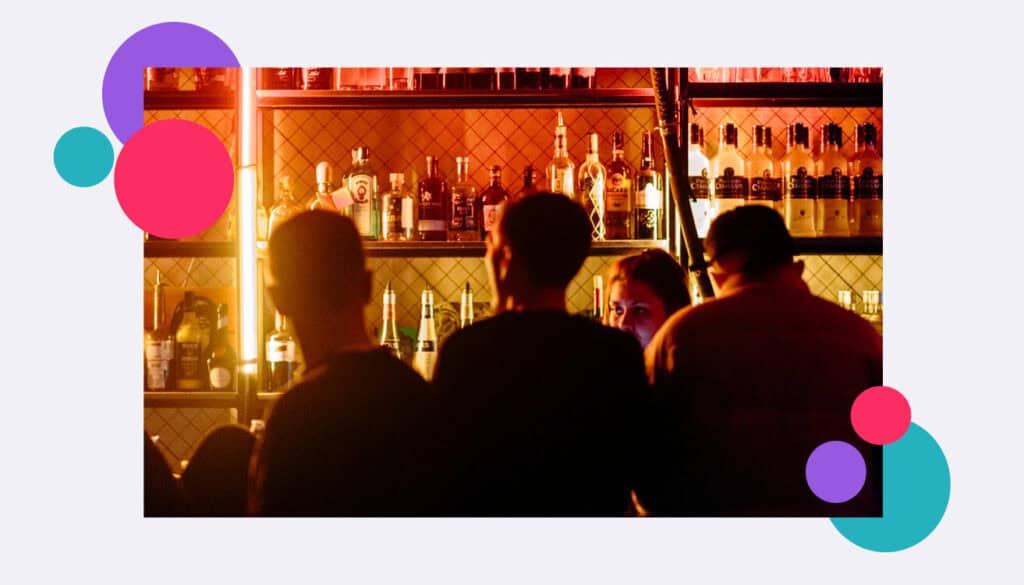
It is also important to note that the nature of hotels themselves may play into the levels of risk. Risk factors for hotel employees can include working late at night, working alone, and working with the public who may be tired, stressed or drunk. Hotels also have many isolated areas, with staff often working outside of the supervision and support of their team.
Rates of injury in the hotel and hospitality sector
Whilst we are focussing on threats from the public, it is important to stress that most reported injuries in this sector come from more ‘typical’ incidents. In fact, the Health and Safety Practitioner attributes only 7% of reported injuries as caused by acts of violence –on par with ‘falls from height’, but less than being ‘struck by an object’ (10%), ‘lifting/handling’ (22%) or ‘slips, trips and falls’ (29%).
Examples of risks within hotels
In 2012 a hotel maid claimed that she had been ‘brutally’ sexually assaulted whilst working at a high-end hotel in New York. The case was eventually settled out of court but its high-profile nature led to a greater awareness of the dangers of hotel work, particularly in the US.
And it’s not just interaction with guests that comes with a risk. We spoke to a maintenance manager who looks after a chain of 25 hotels, pubs and inns in the UK. We were told that, during the first Covid lockdown in 2020, one of their workers had to investigate a 50 room empty hotel after a late-night break-in. Luckily, that staff member was supplied with Safepoint (an emergency response system) and so could instantly call for help if anything went wrong. Unfortunately, the use of panic alarms such as these is not commonplace in the UK hotel sector.

What protections are in place for hotel workers (and other hospitality workers)
Legal protections for hotel and hospitality workers
Despite the almost-universal nature of sexual harassment in the hospitality sector, dedicated legal protection for workers suffering these abuses has been thin for a long time. In 2013, the UK government scrapped a legal requirement for employers to protect their workers from abuse from third parties (customers and clients), by omitting subsections (2) to (4) of section 40 of the Equality Act 2010.
That is now being reversed, and hospitality is one of the sectors it will land on hardest.
What changes on 30 October 2026
Section 21 of the Employment Rights Act 2025 puts a third-party harassment duty back on the statute book. The government’s implementation timeline gives 30 October 2026 as the date it starts.
The wording is short:
“An employer (A) must not permit a third party to harass a person (B) who is an employee of A.”
“Permit” sounds like it needs a decision, and it doesn’t. The Act defines it in the next subsection: you only permit the harassment if it happened in the course of the employee’s employment and you failed to take all reasonable steps to prevent it. So the question after an incident is not only what the guest did. It is what you had already put in place.
For a hotel, that is a broader net than it first looks. A third party is anyone who is not you and not your own staff. Guests, contractors, delivery drivers, agency workers on someone else’s books, and the public walking through your lobby.
The duty is also not limited to sexual harassment, which matters given everything above. It runs on the Equality Act’s general definition of harassment at section 26, covering unwanted conduct related to any of seven protected characteristics: age, disability, gender reassignment, race, religion or belief, sex, and sexual orientation. Racial abuse of a night porter by a guest counts.
One thing to keep straight. Section 21 is on the statute book but it is not yet in force, and the commencement regulations have not been made. What exists today is a published government timetable, not a live duty. We would plan for October rather than tell anyone the law has already moved. Our guide to lone working law covers the wider UK position.
There are, however, more general laws that protect hotel and hospitality workers. For instance, any staff member who is working alone (whether that be at a front-desk, or in a client’s room) is classed as a ‘lone worker’ and, as such, requires special consideration from employers.
Lone workers, including those working in the hotel and hospitality sectors, must have their levels of risk assessed and must be properly supervised, trained and equipped with any relevant safety tools they may need. To understand more about lone working, download our free guide.

Download your free lone working guide today!
Martyn’s Law and hotels
There is a second change coming, and hotels are named in it.
The Terrorism (Protection of Premises) Act 2025, better known as Martyn’s Law, places duties on premises above a capacity threshold. Schedule 1 of the Act lists “Hotels etc”, covering use as “a hotel; a hostel; a holiday park”, as one of seventeen qualifying uses. This is not a case of reading hospitality into a general rule. Hotels are on the face of the Act.
Capacity is what brings a site into scope, and the thresholds sit in section 2. Premises where 200 or more individuals may be present at the same time are standard duty premises. At 800 or more, they become enhanced duty premises.
Standard duty premises need appropriate public protection procedures: evacuation, invacuation (bringing people into the building to shield them), lockdown, and communicating information. Enhanced duty premises need those plus public protection measures covering monitoring, movement, physical safety and security. The Home Office published statutory guidance under section 27 of the Act in April 2026, updated in May.
The Act has not commenced. Government expects it to take effect in spring 2027 without confirming a date, and the Security Industry Authority will be the regulator. There is no obligation to comply yet.
Something here is worth drawing out, because it connects to everything else on this page. People who would actually run an evacuation, an invacuation or a lockdown in a hotel at three in the morning are frequently the same people working alone at that hour: a night manager, a duty receptionist, a lone security officer. Whatever procedure gets written, somebody has to be able to start it on their own, and reach everyone else as they do it.
Best-practice protections for hotel and hospitality workers
The Health and Safety Executive has lots of information about how to keep your hospitality team safe but there are some key points to remember:
- Put together a comprehensive risk assessment. Remember that lone workers may have different needs than those working as part of a team. Whether a staff member is cleaning a room, serving drinks, fixing a light or greeting guests, working alone can bring extra risks to physical and mental wellbeing.
- Listen to your staff –whether they’re expressing concerns about a role they’re about to take on or an experience they’ve already had. Listening and reacting positively to your staff can make your health and safety practice better, and make staff feel more appreciated.
- Implement training for roles that have been deemed as dangerous –whether that’s preparing food, or dealing with intoxicated guests.
- If you can, have staff members work as part of a team. If this is not feasible, you will need to implement ways of keeping in touch and monitoring that worker’s safety (such as lone working devices).
On the first of those, our guide to lone working risk assessments covers how to build one and what to put in it.

Tech-based protections for hotel and hospitality workers
In reaction to several high-profile attacks against lone working hotel staff, several cities and states in the US have implemented ‘panic button’ laws. These laws make it mandatory for larger hotels to provide their lone working staff with wearable panic-buttons –a move that Vox called “one of the greatest #MeToo victories“.
Washington State is the clearest current example. Since 1 January 2026, RCW 49.60.515 has required hotel, motel, retail and security guard employers, along with property services contractors, to provide panic buttons to “isolated employees”, with training and a written policy alongside. Other states have moved on adjacent ground: New York’s silent response button requirement under Labor Law § 27-e starts on 1 January 2027, although that one is aimed at retail rather than hospitality.
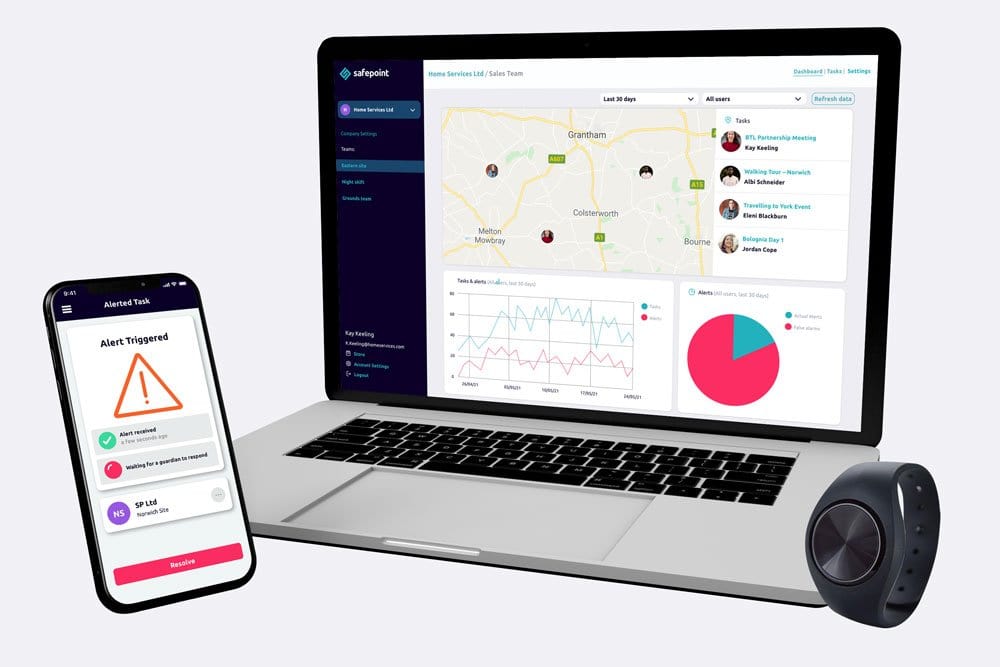
Panic buttons are part of a range of lone working solutions. For instance, with Safepoint’s staff protection system, staff are equipped with a wearable device or an app. With this setup, not only can staff call for emergency help with the tap of the button, but the system will also send an automatic alert if the staff member fails to check in as safe, or even if the staff member has a fall.
So what happens when an alert is sent out? With Safepoint’s solution, companies can choose to handle the alerts themselves via app, an online dashboard, and SMS and email notifications. Alternatively, Safepoint can provide 24/7 alert monitoring from their dedicated 24/7 monitored alarm receiving centre (ARC). This second option is great for companies, like hotels, that work at all times of night across large premises.
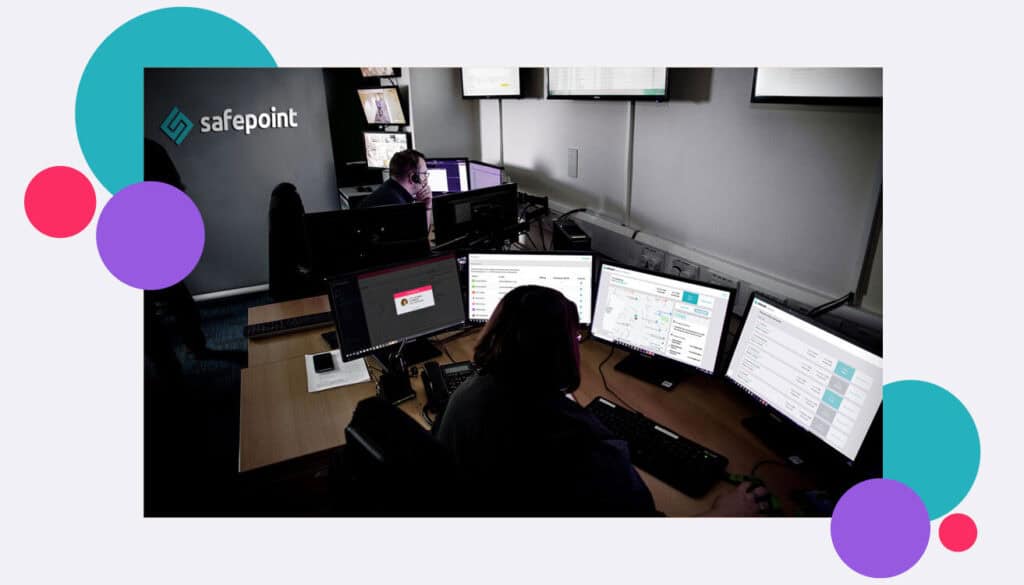
On our Self-monitored plans, the guardians handling an alert do it from their own phone rather than a desk, which is the part that tends to matter in a hotel. A duty manager crossing a car park or checking a function room still sees the alert, the worker’s live location and their stored details, and can act on it there. If you are comparing options across the market, we keep a broader roundup of the best lone worker apps in the UK, and a general explainer on panic alarms for businesses and staff.

Keeping your hotel and hospitality staff safe
Of course, simply equipping lone working staff with panic buttons will not protect them from every risk. Technical solutions must be matched with proper support, training and risk-avoidance.
However, it is clear that there are some very real dangers present all across the hospitality sector: from cleaners afraid to be alone in a room with guests; to waiting staff dealing with drunken patrons; to maintenance workers working up a ladder. When these dangers combine with a lack of visibility and close supervision, tech-based solutions need to come in.
To understand how technical lone worker solutions can work as part of a larger health and safety system, book a meeting with our team and we can discuss what’s best for your business.
What we do to keep hospitality workers safe
Safepoint already works with a number of hotel and hospitality brands, big and small, to provide comprehensive worker protection. Through our wearable panic alarms, award-winning app, and our 24/7 monitoring service, we make protection easy and affordable.